The short version for busy families
Medicare can pay for a scooter. It just pays for a very specific kind of need, and many ads skip that part. Three lines sum it up:
- Part B covers "wheelchairs and power-operated vehicles (scooters) if you’re eligible", Medicare's page on wheelchairs and scooters says, as durable medical equipment.
- Eligibility is about mobility inside your home: using the toilet, eating, dressing, grooming, bathing. Not the mall, not the airport.
- The paperwork comes before delivery: an in-person or telehealth visit, a written order, and for most scooter codes a prior authorization request filed by the supplier.
If that does not describe your situation, you are in the same boat as most scooter buyers: you will choose and pay yourself. That is fine, and the rest of this guide helps either way.
What Medicare's own rules say
The CMS page on power mobility devices lists the conditions in plain words. The practitioner must submit a standard written order before delivery and see the patient face-to-face, and both the practitioner and the supplier must accept Medicare. Then the patient:
- has a mobility limitation that significantly impairs one or more mobility-related activities of daily living (CMS calls them MRADLs), its examples being using the toilet, eating, getting dressed, grooming and bathing in a bathroom;
- has a limitation that "can’t be sufficiently and safely resolved using a cane or walker";
- doesn't have the upper-body function to push an optimally configured manual wheelchair at home, and has no caregiver willing and able to push one;
- can safely operate the scooter and get on and off it.
For scooters specifically, CMS adds that the person must be able to operate the tiller steering, keep their posture stable while riding, have the judgment and vision to drive it safely at home, and live in a home with "adequate access between rooms, maneuvering space, and surfaces" for the scooter. There is even a weight rule: the rider must weigh no more than the scooter's capacity and at least 95% of the capacity of the next lower weight class.
Read that list again with a parent in mind. A person who walks around the house fine but tires out in a store does not meet it. A person who cannot get to the bathroom safely without help might.
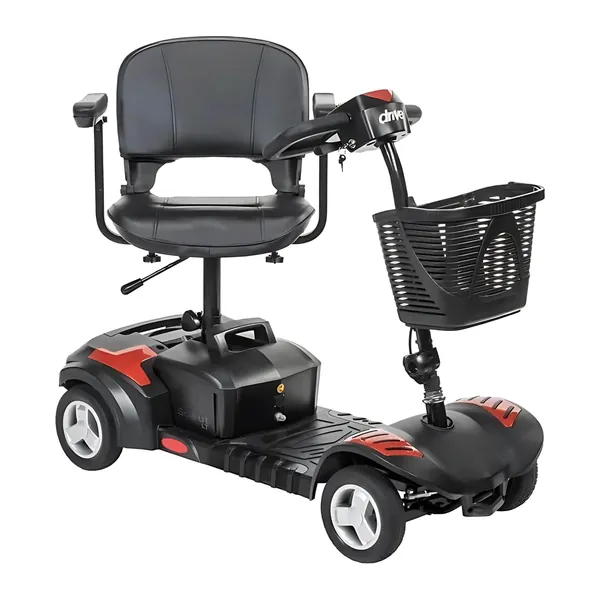
If you end up paying cash: our best cheap scooter, $899 with a lifetime frame warranty and Drive's HCPCS code K0800 on its spec sheet.
The paperwork, in the order it happens
- Face-to-face visit. In person or by telehealth, within the 6 months before the order. CMS asks the practitioner to document that a mobility exam was a major reason for the visit and to answer, among other things, why a cane, a walker or a manual wheelchair won't meet the need at home.
- Standard written order before delivery. No order, no coverage.
- Prior authorization. The CMS listing for code K0800 (a group 1 standard scooter for riders up to 300 lb) says plainly: prior authorization required, nationwide since April 13, 2022, with the face-to-face and written order rules in force since April 17, 2023. Your supplier files it.
- An enrolled supplier. Medicare "will only pay for DME items if you get them from suppliers who are enrolled in Medicare", per its own page.
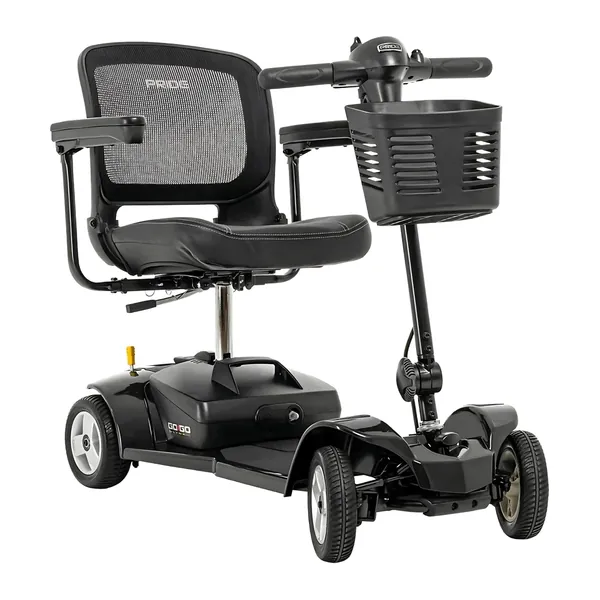
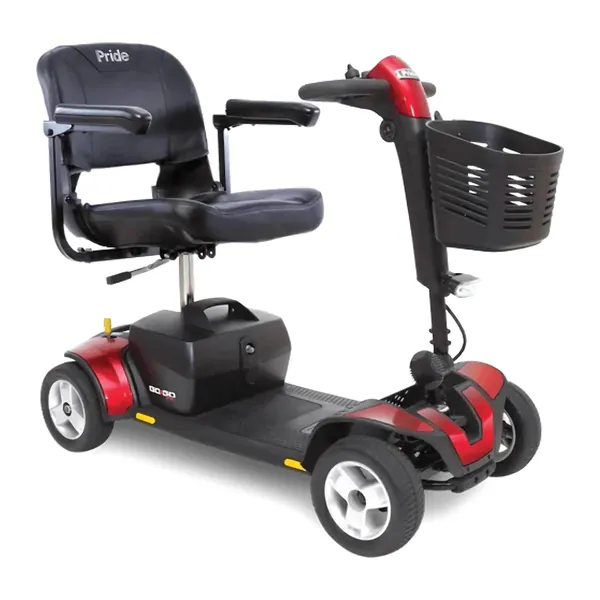
You will see these codes on spec sheets: Drive lists K0800 for the Scout LT, Pride lists K0800 for the Go Go Ultra X and K0801 (Group 1 heavy duty) for the Go Go Sport and Victory 10, Golden lists K0801 for the Buzzaround XL, and Pride's Maxima carries K0808. A code on a spec sheet tells a supplier how to bill; it does not mean Medicare will approve your claim.
What you would actually pay
Medicare's page is short on this: "After you meet the Part B deductible, you pay 20% of the Medicare-approved amount (if your supplier accepts assignment)." It also notes that, depending on the equipment, you may need to rent it, buy it, or choose, and that some items become yours after a number of rental payments.
Two practical consequences. First, the approved amount is not the sticker price you see online, so ask the supplier for your share in dollars before anything ships. Second, the models you can get through Medicare are the ones the supplier stocks and bills; you may not get the exact folding scooter you saw in an ad.
Online retailers that sell for cash often do not bill Medicare at all. SteadyHome, which sells the Journey So Lite, says so in its FAQ: "We don't bill Medicare or insurance." Mobility Department says it accepts FSA and HSA payments. Your HSA or FSA plan decides what it reimburses, so check before you buy.
If you mostly need it outside the home
This is the common case: a parent who manages at home but can no longer walk a grocery store, a theme park or an airport terminal. Medicare's criteria are built around the home, so this need usually falls outside them. Some families ask about Medicare Advantage plans, which can offer extra benefits; ask the plan directly and get the answer in writing.
If you are paying yourself, spend where it counts: the heaviest piece someone has to lift, a weight capacity with margin, and a warranty that covers the electronics for more than a few months. Our ranking for seniors weighs exactly those, and our scooters under $1,500 list starts at $624.99. For flying, read our airline guide first.
How to try, step by step
- Book a visit with the treating practitioner and say it is about mobility at home. Bring a list of what is hard today: getting to the bathroom, the kitchen, dressing.
- Ask directly whether a scooter or a power wheelchair fits the CMS criteria. CMS's own comparison says a scooter needs the rider to steer a tiller and stay steady while riding; a power wheelchair is used when that is not safe.
- Find a Medicare-enrolled supplier that accepts assignment, and ask them to handle the prior authorization.
- Do nothing that ships before the order. A scooter bought first and billed later will not be covered.
- If the answer is no, compare cash prices calmly: our price guide shows what each budget buys.
Nothing here is medical advice. Talk to your doctor or physical therapist about whether a scooter suits you, and follow the maker's instructions.
Our three picks for this article
Scores come from our published formula; the full list is in the ranking.